2024
Sleeping Dog Study
- Medium
- Clay figurative sculpture
- Role
- Life sculptor, anatomical study, surface texturing
- Tools
- Moist studio clay, Timber and wire armature, Serrated loop tools, Boxwood modelling ribs, Directional rakes, Sponge finishing
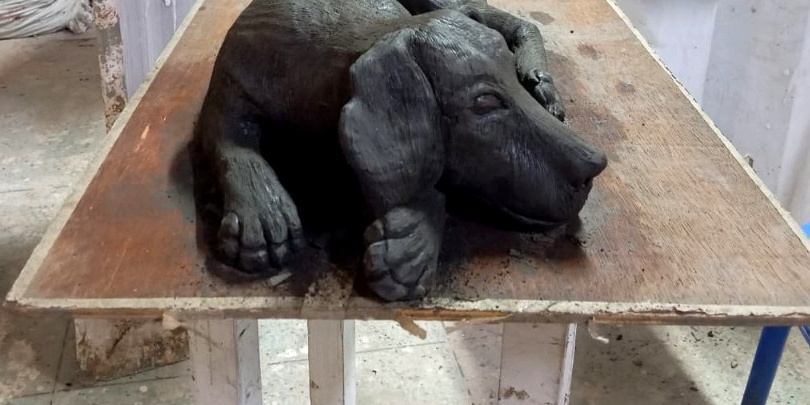
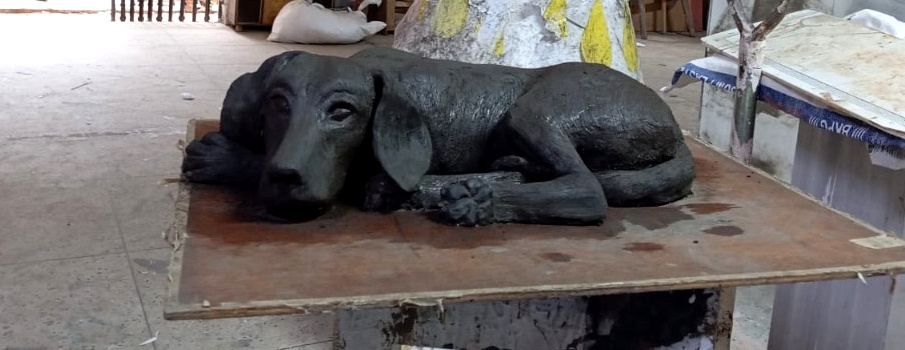
Sleeping Dog Study — master elevated three-quarters study in repose, 2024
An intimate life-size anatomical study exploring animal physiology, skeletal alignment, and passive muscular relaxation in repose. Modelled from direct observation of a resting canine, the sculpture investigates how physical mass settles organically against a ground plane, translating canine softness and bone structure through tactile clay surface modulation.
01
Anatomical Observation & Massing
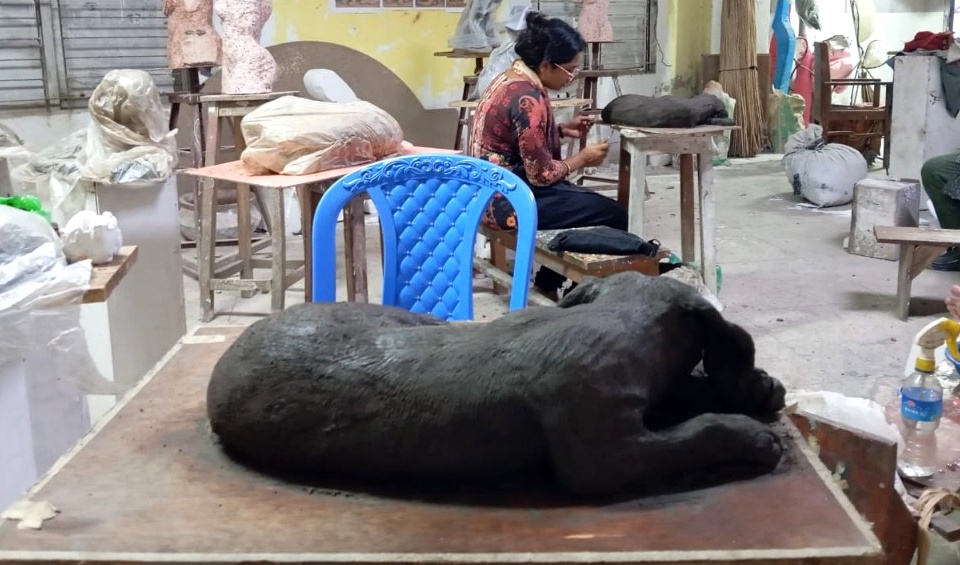
The study began with extensive gestural observation analyzing the skeletal mechanics of a curled canine posture. Particular attention was given to the relationship between the ribcage, shoulder blades, and pelvis as they compress against the ground under natural gravity.
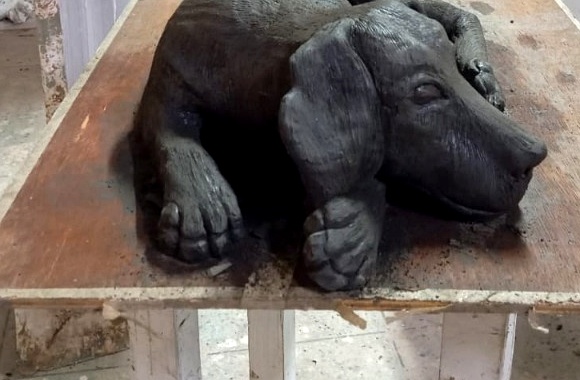
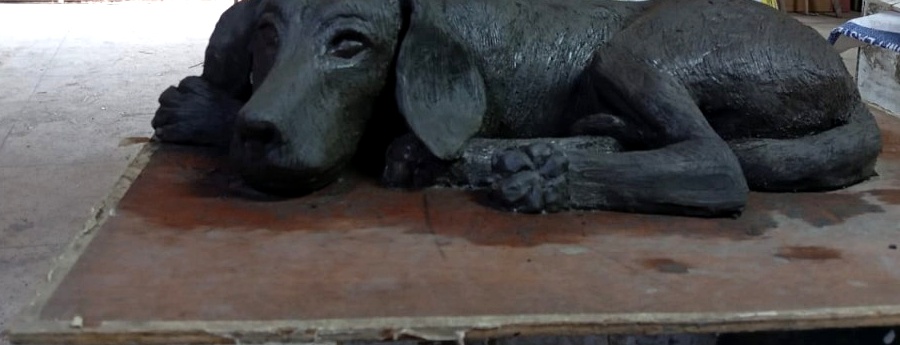
Clay was applied in volumetric blocks corresponding to major muscle groups, establishing anatomical landmarks before developing secondary surface forms. The neck fold and resting paws articulate the gradual transition from weight-bearing tension to complete muscular surrender.
02
Surface Texturing & Moisture Control
To render the tactile quality of canine fur without compromising anatomical mass, the surface was worked with custom serrated wooden ribs and directional wire rake tools. Sweeping tool marks follow the natural growth grain of the coat, contrasting coarse texturing along the flank with delicate smoothing around the snout and eyelids.
Maintaining moisture equilibrium across the moist clay body over a four-week studio period required calibrated damp-cloth wrapping and localized spraying, ensuring consistent plasticity for delicate facial sculpting and preventing structural cracking.
03
Ground Plane Equilibrium & Muscle Relaxation
The study specifically interrogated how gravitational pull acts upon passive animal mass when the skeletal framework is no longer engaged in load-bearing tension. By depressing the ribcage and flattening the flank against the wooden base, the clay body demonstrates physical weight rather than artificial volume.
Fine transitions between the collapsed skin folds beneath the flank and the sharp protrusion of the hip bone establish a tactile rhythm across the sleeping form, grounding the canine figure in a state of authentic organic stillness.